
Industrial · E-Bikes & E-Scooters
Electric Micromobility Wireless Charging | 200W–800W
Electric micromobility wireless charging modules for e-bikes and scooters. Compare 200 W and 800 W options, coil gaps, battery requirements and OEM integration.
Module · DC 54.2V/4A
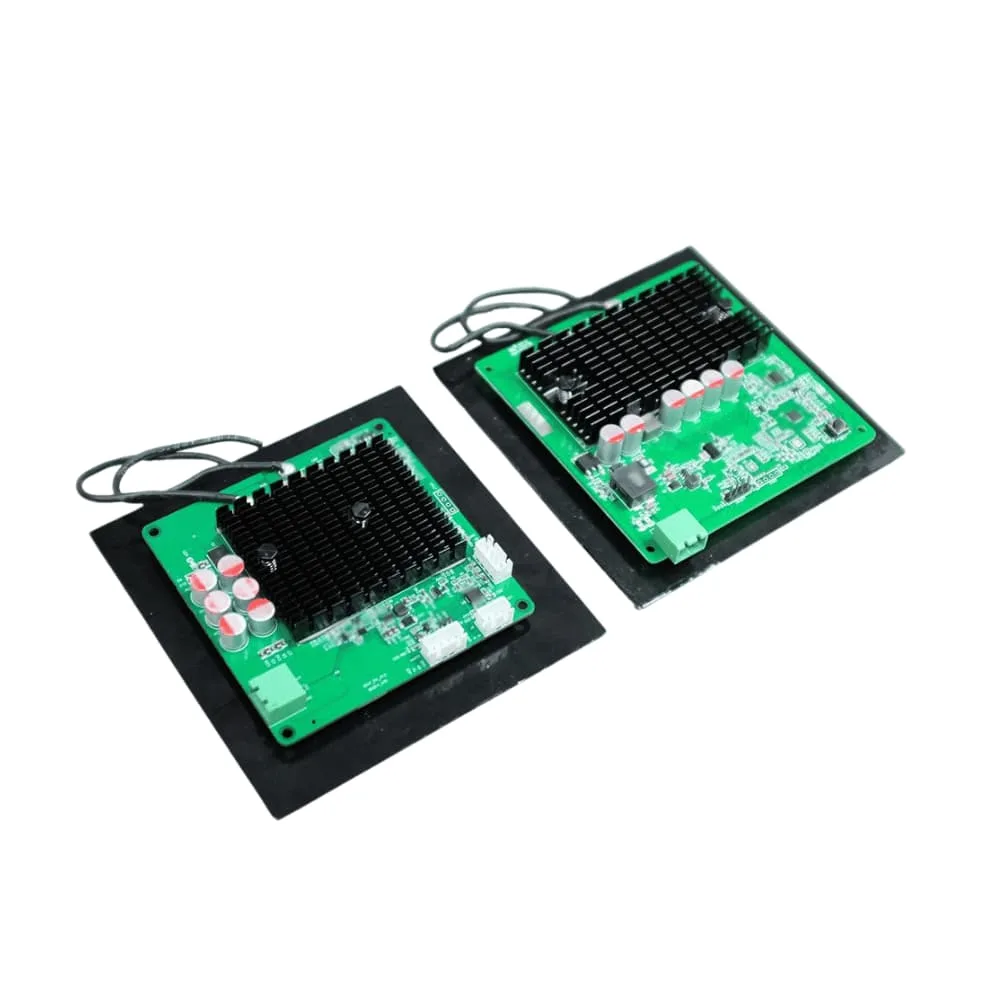
TE03-200W Charging Module
The workhorse for e-bikes, scooters and delivery robots
Module · DC 54.2V/15A
TF02-800W Charging Module
93% efficiency for heavier LEVs and logistics robots
Custom
Engineered around
your application
Battery, enclosure, environment — we design the charging solution to fit. Start the conversation →
Electric micromobility wireless charging for e-bikes and e-scooters
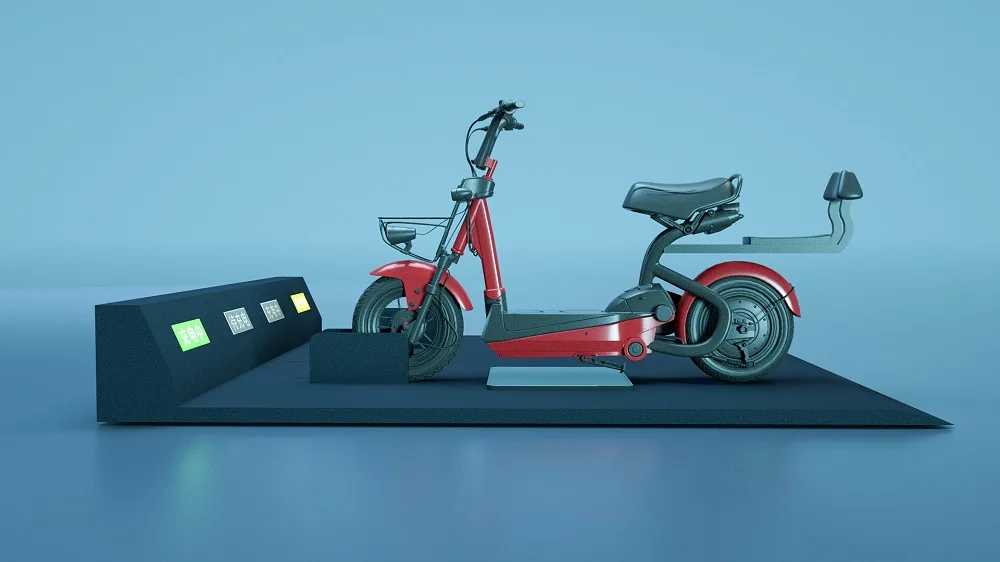
Electric micromobility wireless charging transfers energy from a transmitter in a parking dock or pad to a receiver on an e-bike, e-scooter or cargo vehicle. Inductive coupling replaces the electrical charging contacts; the receiver supplies controlled DC power to the battery charging circuit. A compatible receiver and battery interface must be integrated into each vehicle.
ONEPOINTECH supplies matched transmitter and receiver PCBs and coils for OEM integration: TE03 at 200 W and TF02 at up to 800 W. You design the vehicle mounting, dock, enclosure and power supply around the electronics. These platforms charge parked vehicles; they are not dynamic roadway chargers or universal pads for unmodified bikes.
Charging concept
From dock to battery: the charging path
How park-and-charge works
- 01
Park within the charging zone
A dock or wheel guide positions the vehicle receiver opposite the transmitter. Design for the specified coil gap, lateral offset and vehicle lean.
- 02
Establish the charging link
The matched transmitter and receiver transfer energy across a non-metallic gap. Control logic must coordinate power enable, protection and battery readiness.
- 03
Charge within battery limits
Configure output voltage, current and charging behavior for the battery chemistry and BMS. A nominal 48 V label alone does not establish compatibility.
- 04
Monitor and depart
CAN / RS485 interfaces are available on request for system integration. Vehicle identification, session billing and remote connectivity require your station controller and software.
Hardware / real module photographs
Two platforms. Different integration footprints.
TE03 / 200 W
A starting point for e-bikes and shared scooters.
- Coil assembly
- 120 × 120 × 5.5 mm
- Receiver PCBA
- 90 × 90 × 18 mm
TF02 / up to 800 W
For higher demand when battery and cooling limits allow.
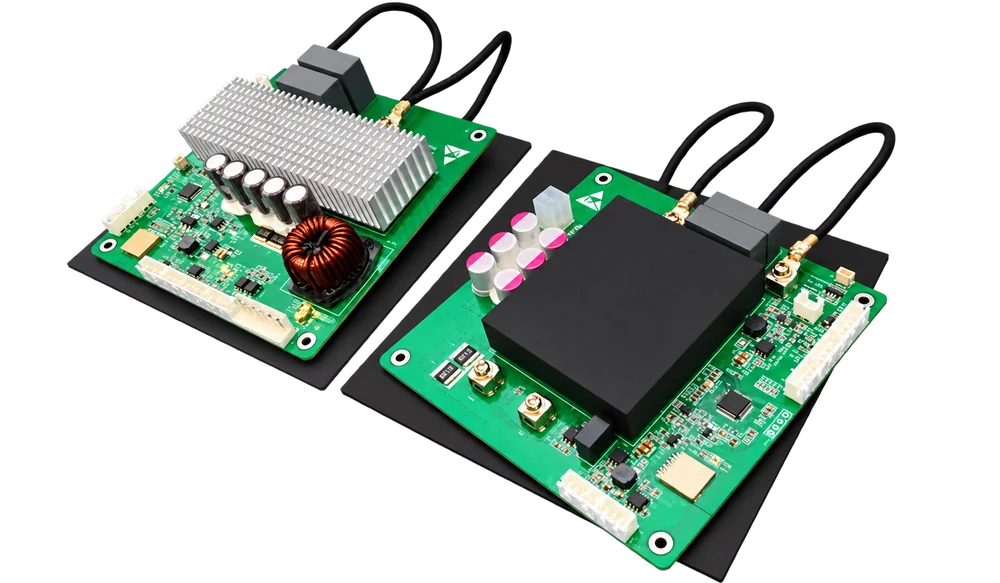
- Coil assembly
- 140 × 135 × 6 mm
- Receiver PCBA
- 130 × 130 × 23 mm
Choose 200 W or 800 W wireless charging
Validate performance in the finished vehicle and dock; peak efficiency is not a guarantee across the full gap and offset range.
| Specification | TE03-200W | TF02-800W |
|---|---|---|
| Starting application | E-bikes, shared e-scooters, longer parking stops | Cargo bikes, delivery trikes, higher energy demand |
| Rated charging power | 200 W | Up to 800 W; 500 W variant available |
| Standard DC output | 54.2 V / 4 A; configurable after review | 54.2 V / 15 A; configurable after review |
| DC input supply | 48 V / 6 A | 48 V / 20 A |
| Coil-to-coil distance | 15–35 mm | 25–35 mm |
| Horizontal alignment tolerance | ±15 mm | ±15 mm |
| Peak DC-to-DC efficiency | 91% at 25 mm | 93% at 30 mm |
| Standby power | ≤0.5 W | ≤1 W |
| Coil dimensions | 120 × 120 × 5.5 mm | 140 × 135 × 6 mm |
| Receiver PCBA dimensions | 90 × 90 × 18 mm | 130 × 130 × 23 mm |
| Communication | CAN / RS485 on request | CAN / RS485 on request |
| Module certification status | CE | Not currently CE certified |
How much charging power does your fleet need?
Start with energy to replenish, not vehicle size: minimum average battery charging power (W) = energy needed (Wh) ÷ available charging time (hours). A 500 Wh battery moving from 20% to 80% state of charge needs about 300 Wh. At a constant 200 W delivered to the battery, the ideal energy-only time is 1.5 hours; at 800 W it is 22.5 minutes. These are sizing examples, not measured charging times.
Actual sessions take longer when the BMS limits current, charging tapers near full, temperatures cause derating or alignment reduces output. A 15-minute stop at 200 W adds at most 50 Wh before these effects. Choose the higher-power module only if the battery can accept the current and the enclosure can dissipate the heat. Input energy calculations must also include the AC/DC supply and wireless transfer losses.
Wireless charging, plug-in charging or battery swapping?
Select the operating model around parking behavior, labor and vehicle availability.
| Decision | Wireless parking docks | Plug-in charging ↗ | Battery swapping |
|---|---|---|---|
| Best fit | Repeat parking locations and frequent top-ups | Controlled depots or individual riders | Routes with little time to park |
| Vehicle requirements | Integrated receiver and compatible battery interface | Compatible charging port and charger | Removable pack and safe swap procedure |
| Daily handling | Automatic power transfer once correctly parked | Connect and disconnect each vehicle | Exchange packs and manage charged inventory |
| Infrastructure work | Powered docks, alignment guides, enclosures and controls | Outlets, cable routing and charger storage | Spare batteries, charging area and logistics |
| Key cost to measure | Installed dock cost and successful charge sessions | Handling time and connector repairs | Swap labor, transport and spare-pack inventory |
Charging concept
Design around the coils, not ground clearance
Side view · coil-to-coil distance
TE03: 15–35 mm · TF02: 25–35 mm. Include enclosure walls when measuring the total separation.
Top view · horizontal offset
Use guides to control parking position and vehicle lean. Confirm performance at your combined gap, offset and load.
Engineering requirements before a micromobility pilot
Battery and BMS compatibility
Provide pack chemistry, series-cell count, maximum charge voltage and allowed current. Standard 54.2 V output is not suitable for every 48 V-class battery. Confirm charge termination and BMS behavior before connecting a pack.
Gap, lean and parking tolerance
Measure coil-to-coil separation including both housing walls. ±15 mm lateral tolerance is not ground clearance. A raised pad or dock may be needed; test loaded vehicles, kickstand lean and parking variation together.
Outdoor enclosure and cooling
Bare PCB and coil sets have no finished outdoor IP rating. The OEM must provide ingress protection, drainage, impact resistance, strain relief and a thermal path for the chosen installation.
Foreign objects and protection
Modules include foreign object detection and over-current, over-voltage and over-temperature protection. Validate detection and shutdown behavior with the finished housing, nearby metal and expected debris.
Compliance of the complete product
Module certification does not certify a complete vehicle or charging station. Plan market-specific electrical safety, EMC, electromagnetic exposure and battery-system assessment with your compliance team.
Fleet control and interoperability
CAN / RS485 are local interfaces, not a cloud service. Define station control, identification, authentication and data collection. Cross-brand charging needs compatible coils, electronics, control logic and battery settings.
Will wireless charging pay off for your fleet?
Use a small pilot to compare three practical costs with your current charging method.
Less handling time
Track hours spent plugging in vehicles, moving batteries and managing charging queues.
More vehicles ready to ride
Measure charge success, energy added per stop and time vehicles spend unavailable.
A clear cost comparison
Compare those gains with installed dock cost, receiver integration, electricity and maintenance.
From evaluation set to fleet rollout
- 01
Share the design brief
Send battery specifications, daily Wh demand, parking duration, available coil and PCB space, gap, expected offset, fleet size and installation environment.
- 02
Evaluate a matched set
Start from one set for engineering evaluation. Verify battery charging behavior, output power, efficiency boundaries, heat and shutdown responses on a representative vehicle.
- 03
Pilot at a real parking site
Measure successful charging starts, parking accuracy, energy delivered per stop, rider behavior, availability and maintenance hours against your current charging method.
- 04
Validate before scaling
Finalize the enclosure, compliance evidence, station controls and installation procedure. Agree configuration, production quantities, lead time and support requirements before rollout.
Charging concept
Where the charging hardware fits
Vehicle side
Package the receiver coil and PCB in a protected mounting location. Route the output to the approved battery charging interface.
Station side
A raised pad or guided dock brings the transmitter within the specified coil gap. Provide the enclosure, DC supply and controls.
Validate together
Check ground clearance, lean, impact exposure, nearby metal and cooling on the actual vehicle.
Select a module or discuss your integration
15–35 mm coil gap
TE03: 200 W evaluation platform
Review dimensions, specifications and the datasheet for an e-bike or e-scooter dock.
View the 200 W module →25–35 mm coil gap
TF02: up to 800 W
Evaluate higher-power charging for cargo vehicles with compatible batteries and sufficient thermal capacity.
View the 800 W module →Vehicle + dock + battery
OEM feasibility review
Share your battery limits and mounting drawing to discuss output configuration, interfaces and evaluation requirements.
Discuss your micromobility project →FAQ
Electric micromobility wireless charging FAQ
Can an existing e-bike or e-scooter use a wireless charging pad?
Only after a compatible receiver and charging interface are integrated into the vehicle. An unmodified bike cannot charge simply by parking on the pad. Retrofit feasibility depends on mounting space, battery access, BMS requirements and vehicle warranty conditions.
Is this a wireless phone charger for a scooter?
No. These 200 W and 800 W modules charge the vehicle traction battery through a matched transmitter and receiver. They are not Qi phone chargers or phone-mount accessories.
How efficient is electric micromobility wireless charging?
TE03 reaches a published peak of 91% DC-to-DC at a 25 mm coil gap; TF02 reaches 93% at 30 mm. These figures exclude the external AC/DC supply and do not describe wall-to-battery efficiency. Measure performance across your actual gap, offset, load and temperature conditions.
Can the modules charge 36 V, 48 V or 52 V batteries?
Potentially, after reviewing the required charging voltage, chemistry, current limit and BMS. Output configuration is subject to the validated module range. Nominal battery voltage alone is insufficient; confirm the exact charge profile with engineering.
Does wireless charging work in rain or through metal?
Outdoor use requires a suitable enclosure designed by the integrator. The coils transfer power across a non-metallic gap; a metal plate must not sit between them. Test nearby metal, water exposure and debris in the complete dock and vehicle assembly.
Can one dock charge different brands of e-bikes and scooters?
Only when the vehicles have compatible receiver hardware, charging controls and battery configurations. Wireless transfer by itself does not establish universal interoperability. Validate each vehicle and receiver combination.
Is charging while riding supported?
No. TE03 and TF02 are for stationary charging at a parking pad or dock. Dynamic roadway charging is a separate infrastructure and engineering application.
What should I send to request pricing?
Send vehicle type, battery chemistry and charging limits, desired power, charging window, coil gap and offset, mounting dimensions, communication needs, environment and expected quantities. Evaluation can start from a single matched set; enclosure and station development are scoped separately.
Questions about this solution?
Our team answers within one business day — tell us your application and we will recommend a solution.