
Conductix-Wampfler is one of the few suppliers that sells both sides of the wireless charging decision. Its IPT Floor system runs continuous inductive power along a buried route; its WirelessCharger provides conventional point charging at a dock. Choosing between them is the first decision, and the supplier name comes second.
ONEPOINTECH sells into both, but with different products: a point-charging line for AGV and AMR docks, and the WidTrans CPS line for continuous supply on overhead transport, stocker cranes and conveyors. This page explains which architecture fits which project, what each design does to the vehicle and the installation, and which ONEPOINTECH product belongs in each case.
Two products, two architectures
IPT Floor — continuous power along the route
A primary conductor is installed in a trench or under the floor surface along the vehicle's travel path. Pickups on the vehicle draw power while it moves, so energy is available continuously rather than only at stops. Conductix-Wampfler's reference base for this architecture is concentrated in automotive assembly, where vehicles follow fixed routes for years.
The design consequence is significant: because the vehicle never depends on stored energy for a full shift, the battery can be much smaller or removed entirely. That cuts vehicle weight, cost and the maintenance burden of battery replacement. The trade-off is that the route itself becomes infrastructure — expensive to install and expensive to change.
WirelessCharger — point charging at a dock
The vehicle stops over a transmitter at a docking or buffer position and charges through an air gap. Only the dock needs equipment. Installation is cheap and movable, and the battery stays on the vehicle, sized to cover the shift with top-ups during natural idle time.
This is the architecture behind the ONEPOINTECH LC and LS systems. The range runs from 60–800 W modules for OEM integration through the 1.5 kW LC180-A30, 3 kW LS300-A60 and 6 kW LC600-A100 systems.
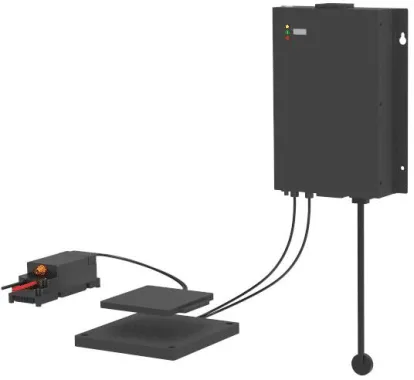
1.5 kW · 18–60 V
LC180-A30
Covers 24 V, 36 V and 48 V vehicles from one platform, at 30 A and a 10–30 mm gap.
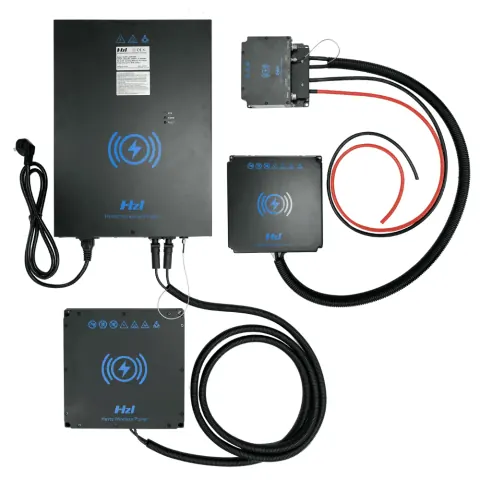
3 kW · 42–58 V
LS300-A60
48 V-class dock charging with CAN/RS485 and a 20–45 mm air gap.
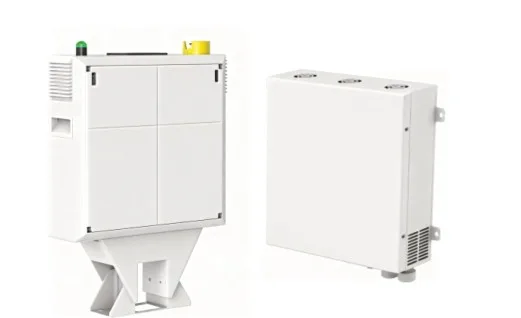
6 kW · heavier AGVs
LC600-A100
For shorter charging windows and heavier vehicles, quoted per project.
Continuous supply — ONEPOINTECH WidTrans CPS
The continuous side is covered too, by a separate ONEPOINTECH line rather than the dock chargers. WidTrans is a track-based CPS system — power supply unit, conductor cable, clamps, capacitor boxes and pickups — sold for overhead transport, stocker cranes and conveying:
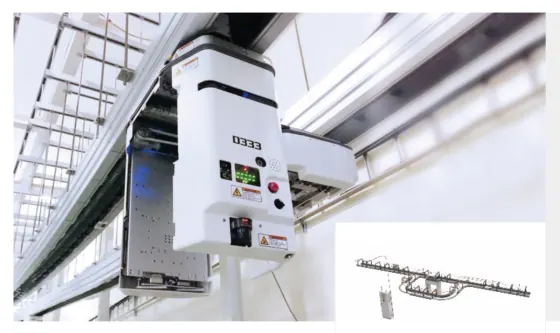
Continuous CPS · OHT / OHS
WidTrans-F10
Wear-free continuous power for semiconductor overhead transport. Zero dust, no sparks, no contact shoes to replace.
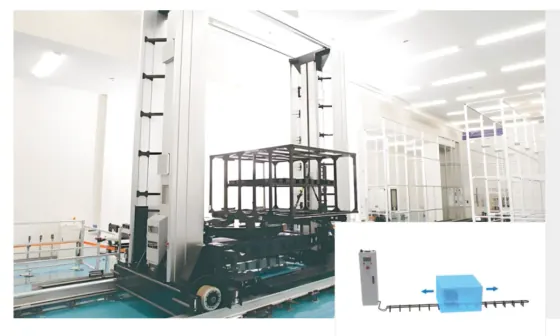
Continuous CPS · STK / OHCV
WidTrans-F20
For stocker cranes in wafer and LCD fabs. Non-contact operation, so no particle generation and no contact wear.
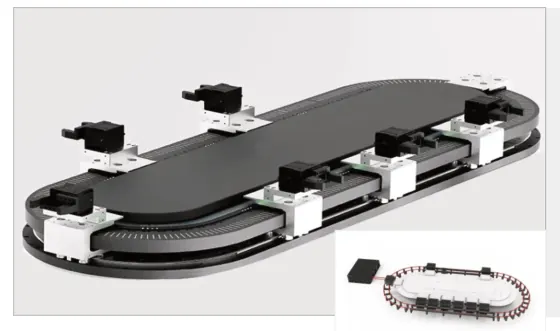
Continuous CPS · 140 kHz
WidTrans-F140
Track cable, clamps, capacitor boxes and pickups for RGVs, sorters and linear conveyors. No speed limitation.
So the head-to-head with IPT Floor is not a point-charging comparison: it is WidTrans vs IPT Floor for cleanroom and conveyor work, and LC/LS vs WirelessCharger for dock charging. Keep the two comparisons separate when you build the shortlist.
Contacts and conductor rails
Conductix-Wampfler also supplies conductive charging contacts and conductor rail systems. These are the cheapest transfer method and often the most efficient, but they wear, need alignment and are sensitive to dust, water and wash-down. ONEPOINTECH does not supply this category.
How to decide
| Question | Leans continuous supply | Leans point charging |
|---|---|---|
| Route | Fixed for years, long, dedicated | Short, shared, likely to change |
| Operation | Near-continuous, high utilisation | Shift work with idle windows |
| Battery role | Shrink or eliminate | Keep; top up at the dock |
| Upfront cost | High — route preparation dominates | Low — only the dock |
| Change cost | High | Low |
| Fleet size needed to justify | Large | Any |
| Environment | Where wash-down or dust rules out contacts | Where docking is already reliable |
Architecture descriptions compiled from Conductix-Wampfler public product pages and published reference material, checked November 2026. Product specifications and reference installations change; confirm current details with the supplier before specifying.
Where Conductix-Wampfler is the right choice
- The battery should shrink or disappear. On a fixed, high-utilisation automotive or intralogistics route, continuous supply changes the vehicle itself. A dock charger cannot do that — the comparison is against a CPS system such as ONEPOINTECH's WidTrans, not against the LC or LS range.
- Airport baggage handling and cleanroom overhead transport. Conductix-Wampfler's reference base is strongest exactly where vehicles run the same path thousands of times a day.
- Wash-down and harsh environments where contacts fail. Continuous inductive supply removes both the contact wear and the exposed conductor.
- A single vendor for induction, contacts and conductor rails. Useful when the design mixes transfer methods across zones.
- High-power continuous transfer. Beyond the 6 kW ceiling of the ONEPOINTECH range.
Where ONEPOINTECH fits
- The vehicle can stop to charge. Opportunity charging during natural idle time avoids route infrastructure entirely.
- Layouts that change. Adding a dock is a fraction of the cost of reworking a buried primary conductor.
- Mixed or small fleets. Below the fleet size that pays back a route installation, point charging is simply cheaper.
- Custom voltage, current, coil and housing. Adaptable per project, with samples before a production order.
- Published specifications and online shop. Standard modules and systems can be evaluated and bought without a quotation cycle, which shortens early comparison.
- Cleanroom overhead transport and conveying. WidTrans F10, F20 and F140 supply continuous contactless power to OHT, stocker and RGV systems, where the vehicle never stops to charge.
What to check before comparing quotes
- Compare energy per shift, not nameplate kW. A continuous system and a dock charger deliver fundamentally different amounts of energy per vehicle per day.
- Include route preparation in the continuous number. Trenching, floor work and commissioning usually cost more than the charging hardware and are often quoted separately.
- Check where the vehicle cannot receive power. A continuous route still has gaps — junctions, lifts, shared aisles — and the battery must cover them.
- Match the air gap to the vehicle's docking accuracy. A point charger only works if the vehicle can reliably position itself over the transmitter.
- Confirm the certification market. UL/CSA for North America, CE and the applicable EN standards for Europe, plus cleanroom or SEMI requirements where they apply.
Applications
ONEPOINTECH point charging serves AMRs, AGVs, automated guided carts, unmanned forklifts, medical carts, inspection robots and custom battery-powered equipment. The AGV and AMR wireless charging page covers the range in detail, and the supplier comparison puts Conductix-Wampfler, VAHLE, Wiferion, Delta and SEW-EURODRIVE in one table.
Compare another supplier
The same head-to-head is written out for Wiferion, Delta MOOVair and VAHLE. If you are still building the shortlist rather than comparing one supplier, the industrial wireless charging supplier comparison covers all of them in one table, together with the criteria that decide between them.
Request a Quote
If your fleet can charge at a dock, send the details and ONEPOINTECH will confirm the fit:
- Vehicle type, route and fleet size
- Battery chemistry, voltage and capacity
- Idle time available for opportunity charging
- Installation space, air gap and alignment tolerance
- Communication requirement (CAN, RS485 or other)
- Target certification market
- Estimated order quantity