
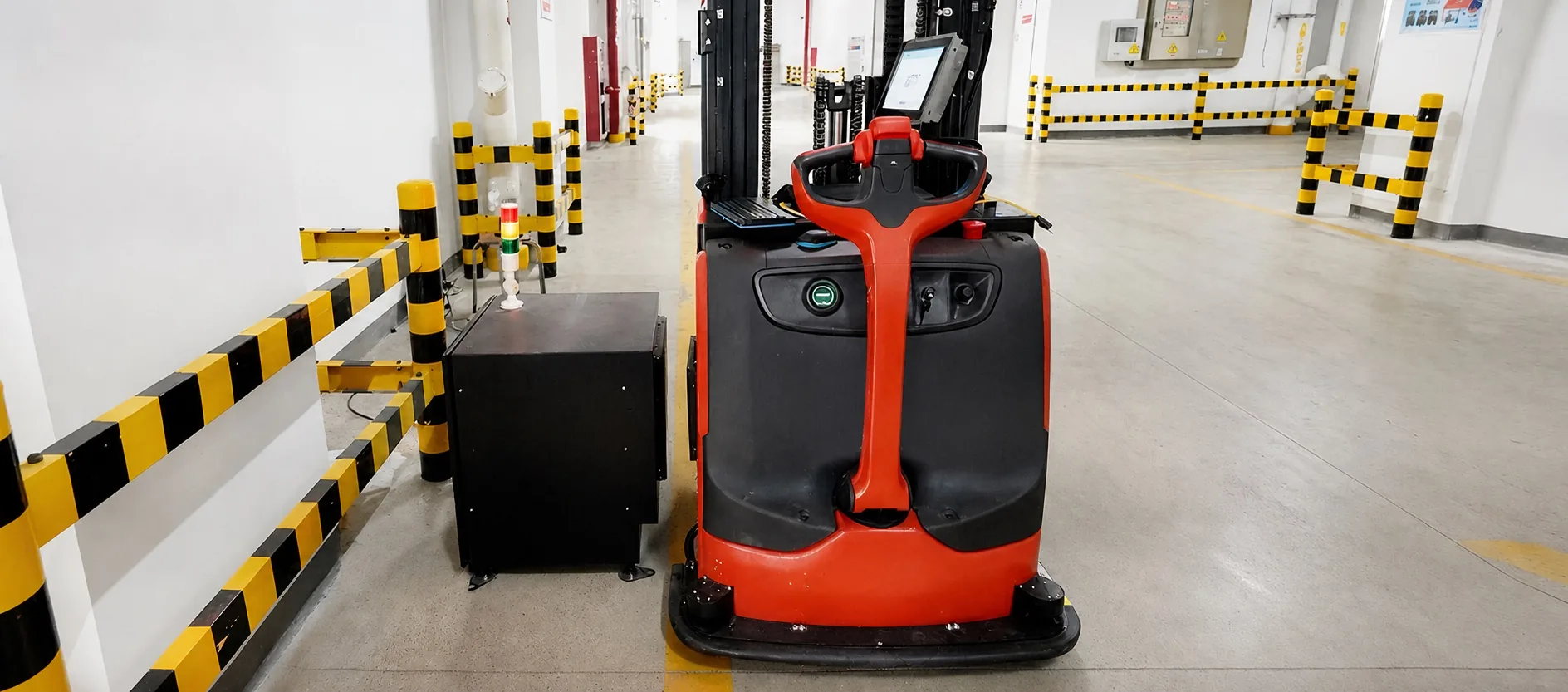
Industrial wireless charging is no longer a single product category. A buyer choosing a supplier for AGVs, AMRs, forklifts or mobile robots is really choosing between three power architectures, and each architecture has a different group of vendors.
This page compares the suppliers an engineering or procurement team is most likely to shortlist in 2026: Wiferion (now a PULS brand), Delta Electronics, VAHLE, Conductix-Wampfler, SEW-EURODRIVE and ONEPOINTECH. It explains which one fits which project, and where ONEPOINTECH is — and is not — the right answer.

Industrial wireless charging suppliers at a glance
| Supplier | Main product lines | Architecture | Power range | Sales model | Typical fit |
|---|---|---|---|---|---|
| Wiferion (PULS) | etaLINK 1000 / 3000, CW1000 | Point charging | ~1–3 kW; 3 kW unit scalable to 6–9 kW | Quote via PULS and distributors | Established European ecosystem, cleanroom, battery-plus-charger packages |
| Delta Electronics | MOOVair 01 / 03 and larger MOOVair units | Point charging | 1–30 kW family | Distributor-led | High-volume logistics, broad power range, global distribution |
| VAHLE | vPOWER CPS 20 kHz and 140 kHz; charging contacts | Continuous track + contacts | Up to ~30–40 kW per section or controller | Direct and system projects | Route-long power, heavy AGVs, monorail and crane systems |
| Conductix-Wampfler | IPT Floor, WirelessCharger 3.0, charging contacts | Continuous track + point | kW-class point charging; high-power IPT | Direct and system projects | Automotive assembly, airports, cleanroom overhead transport |
| SEW-EURODRIVE | MOVITRANS line and MOVITRANS spot | Continuous track + point | 7.5–11 kW field plates in the spot family | Direct and system projects | German automation projects, heavy mobile vehicles, safety-integrated charging |
| ONEPOINTECH | 60–800 W modules; 1.5 / 3 / 6 kW systems; WidTrans F10 / F20 / F140 CPS | Point charging + continuous CPS | 0.06–6 kW point; continuous CPS for OHT, stocker and RGV | Direct OEM supply and online shop | OEM integration, pilot projects, custom coils; cleanroom overhead transport |
Supplier descriptions are compiled from public product pages and datasheets, checked November 2026. Power ranges are per family, not per single product. This is a selection guide, not a ranking.
The three architectures decide more than the brand
1. Point charging — charge at a stop
A transmitter is installed at a dock, buffer zone or parking position, and the vehicle charges when it stops over it. The battery still has to cover the shift, but the vehicle can top up during natural idle time. Infrastructure cost is low because only a few positions need equipment.
This is the largest group: Wiferion, Delta MOOVair, SEW MOVITRANS spot, Conductix WirelessCharger and ONEPOINTECH all sit here. The comparison then comes down to voltage window, air gap, alignment tolerance, communication and commercial terms.
2. Continuous track — power along the route
A primary conductor runs along the travel path and the vehicle picks up power while moving. The battery can shrink dramatically or disappear, which changes vehicle weight, cost and maintenance. Installation is expensive because the route itself has to be prepared.
VAHLE vPOWER and Conductix-Wampfler IPT Floor are the reference systems here; SEW MOVITRANS line is the same idea. ONEPOINTECH sells the same architecture at a smaller scale under the WidTrans name, aimed at OHT, stocker cranes and RGVs rather than floor-running AGVs. This architecture wins on fixed, high-utilization routes and loses on flexible or frequently reconfigured layouts.
3. Contact charging — plates, pins or rails
Conductive contacts are the cheapest and often the most efficient option, but they wear, need alignment and are sensitive to dust, water and wash-down. VAHLE and Conductix-Wampfler both supply large contact ranges alongside their inductive products. Many fleets use contacts at fixed depots and wireless only where the environment or uptime requirement justifies it.
Five questions that decide the shortlist
- How long is the route, and how often does it change? Long and stable favours continuous track; short or changing favours point charging.
- What uptime model do you need? Opportunity charging during natural idle time is cheaper than a battery that must cover a full shift.
- What is the battery voltage and chemistry? A 24 V small AMR and a 48–80 V heavy AGV are different product families, not different options on one datasheet.
- How much misalignment can your docking tolerate? Air gap and lateral offset determine whether the vehicle needs a mechanical guide or can dock freely.
- Which certification market must the system serve? UL/CSA for North America, CE and the applicable EN standards for Europe, and cleanroom or SEMI requirements if the process demands it.
Supplier notes
Wiferion (PULS)
Wiferion has been a PULS brand since October 2023, after Tesla acquired the company and sold the industrial charging business. etaLINK 3000 is the 3 kW reference unit; CW1000 covers small AMRs. The strength is the established ecosystem and European support; the trade-off is quote-based evaluation. A detailed model comparison is on the Wiferion alternative page.
Delta Electronics
Delta's MOOVair family spans roughly 1–30 kW, with MOOVair 03 at 3.3 kW and MOOVair 01 at 1 kW. Delta is the volume leader in this category, with global distribution and a broad product range. The trade-off is that configuration and customization run through the distributor or Delta's own sales process rather than a direct OEM relationship. The model-level comparison is on the Delta MOOVair alternative page.
VAHLE
VAHLE's wireless offer is built around continuous power: the CPS 140 kHz family for compact, high-density systems and the CPS 20 kHz family for heavy vehicles. VAHLE also has one of the widest charging-contact ranges, which matters if the project is hybrid. It is the natural shortlist entry for route-long power and heavy AGV or monorail installations. The architecture comparison is on the VAHLE alternative page.
Conductix-Wampfler
Conductix-Wampfler has supplied inductive power for more than two decades, with IPT Floor for continuous supply and WirelessCharger 3.0 for point charging. The reference base is strongest in automotive, airport baggage handling and cleanroom overhead transport. Projects tend to be engineered systems rather than catalogue purchases. The continuous-versus-point comparison is on the Conductix-Wampfler alternative page.
SEW-EURODRIVE
MOVITRANS comes in a line version for continuous supply and a spot version for point charging, with field plates in the 7.5–11 kW class and an integrated safe-field-stop function. It is a strong fit where the project already standardises on SEW drives and controls.
Where ONEPOINTECH fits
ONEPOINTECH spans both architectures, but not for the same vehicle. The LC and LS systems are point charging for AGVs and AMRs, from the 1.5 kW LC180-A30 through the 3 kW LS300-A60 to the 6 kW LC600-A100. The WidTrans CPS line is continuous supply for overhead transport, stocker cranes and RGVs. For OEM integration, the range starts at 60–800 W modules.
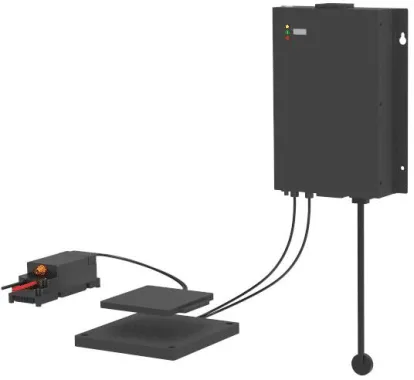
1.5 kW · 18–60 V
LC180-A30
Covers 24 V, 36 V and 48 V vehicles from one platform, at 30 A and a 10–30 mm gap.
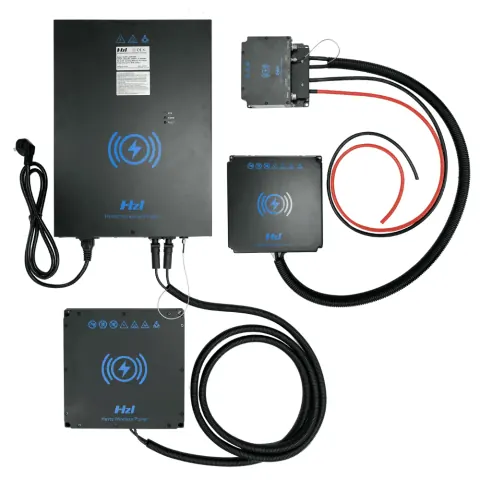
3 kW · 42–58 V
LS300-A60
48 V-class dock charging with CAN/RS485 and a 20–45 mm air gap.
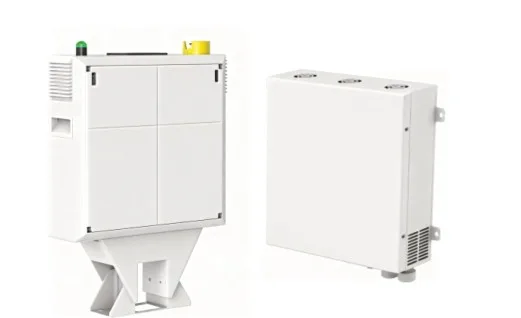
6 kW · heavier AGVs
LC600-A100
For shorter charging windows and heavier vehicles, quoted per project.
For continuous supply — overhead transport, stocker cranes, RGVs and sorters — the equivalent products are the WidTrans CPS systems:
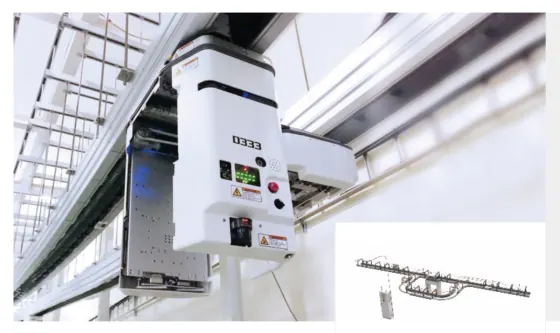
Continuous CPS · OHT / OHS
WidTrans-F10
Wear-free continuous power for semiconductor overhead transport. Zero dust, no sparks, no contact shoes to replace.
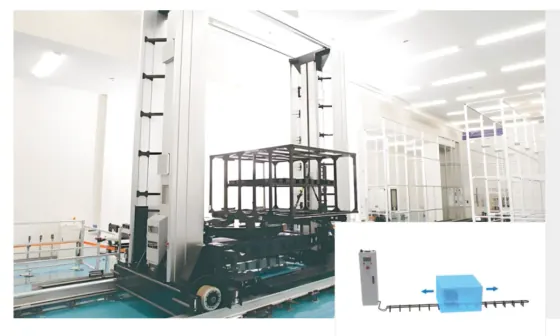
Continuous CPS · STK / OHCV
WidTrans-F20
For stocker cranes in wafer and LCD fabs. Non-contact operation, so no particle generation and no contact wear.
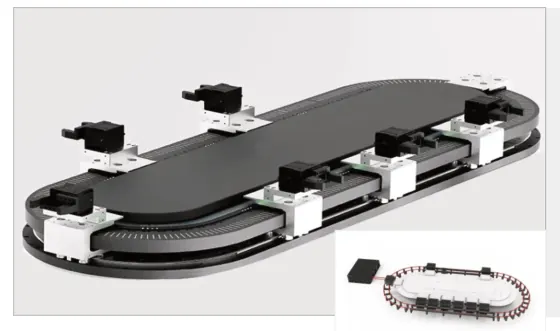
Continuous CPS · 140 kHz
WidTrans-F140
Track cable, clamps, capacitor boxes and pickups for RGVs, sorters and linear conveyors. No speed limitation.
The fit is projects that need public specifications early, a sample before a fleet order, or a custom voltage, current, coil, housing or communication interface. The trade-off is scale and brand recognition: ONEPOINTECH is a smaller supplier than Delta or SEW-EURODRIVE, and the integration work is shared with your engineering team rather than delivered as a turnkey system.
The AGV and AMR wireless charging systems page covers the full range, and the industrial wireless charging hub covers the technology and selection basics.
Where to buy: direct, distributor or shop
Most industrial wireless charging is bought through a quotation, not a checkout page. Wiferion, Delta, VAHLE, Conductix-Wampfler and SEW-EURODRIVE work through direct sales, distributors or system integrators, and pricing depends on the vehicle, battery and certification scope.
ONEPOINTECH publishes standard product specifications and sells standard modules and systems through its online shop, with RFQ support for configured projects. That is useful for a first evaluation or a pilot, but it does not remove the need to check the integration against the vehicle.
Supplier descriptions use each company's public product pages, catalogues and datasheets, checked in November 2026. No competitor pricing is published, so none is quoted here. Product ranges and ownership change; confirm the current model and certification status with the supplier before specifying it.
Request a Quote
If your project is point charging and you need 1.5–6 kW systems or an OEM module, send the vehicle details:
- Robot or vehicle type and fleet size
- Battery chemistry, voltage and capacity
- Required charging time and duty cycle
- Installation space, air gap and alignment tolerance
- Communication requirement (CAN, RS485 or other)
- Target certification market
- Estimated order quantity
ONEPOINTECH will confirm whether a standard system fits or whether the project needs a custom configuration.
Request A Quote