
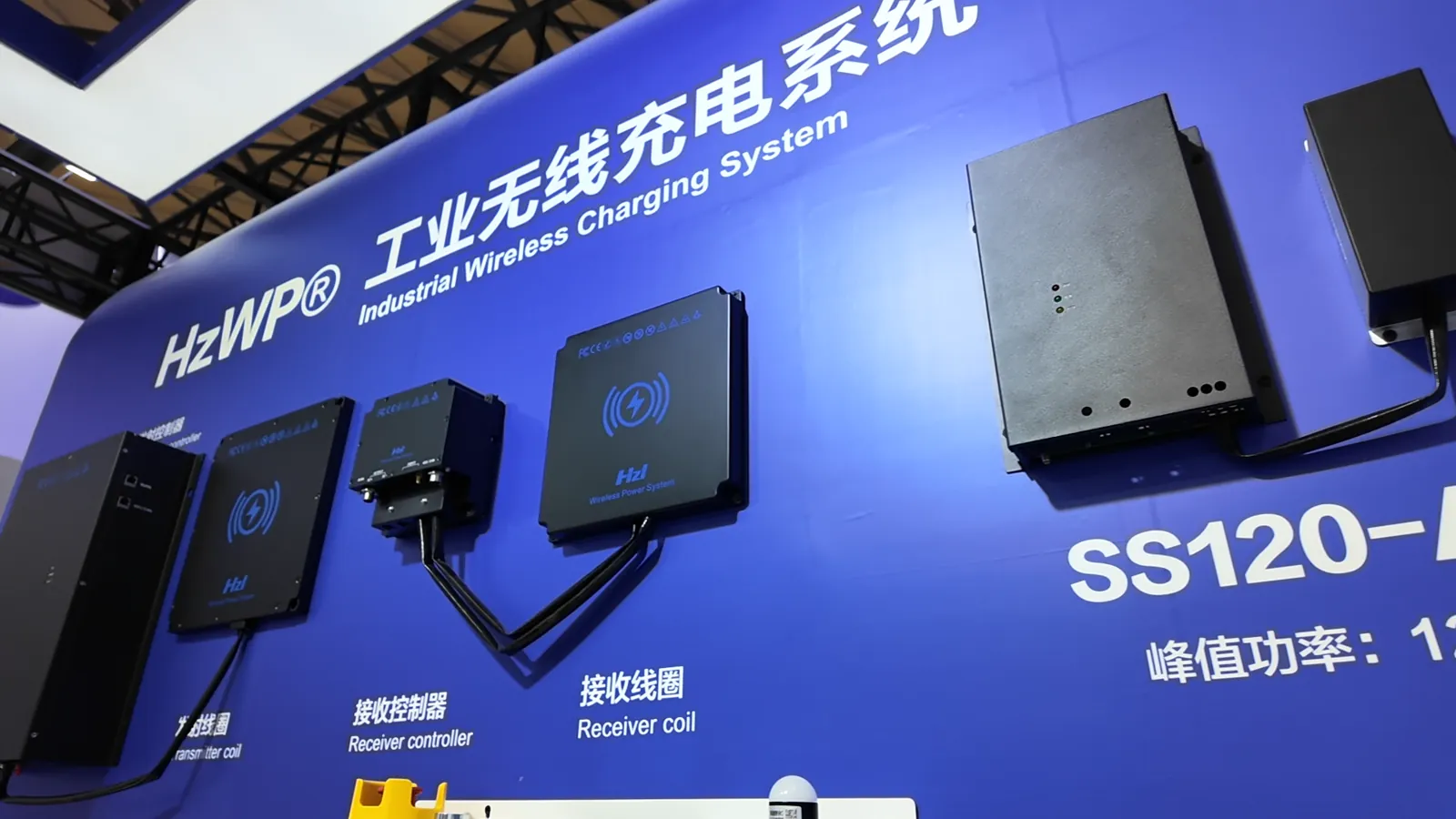
ONEPOINTECH attended CeMAT ASIA 2026 in Shanghai, where 1.5 kW, 3 kW and 6 kW industrial wireless charging products were exhibited. For teams developing automated guided vehicles (AGVs) and autonomous mobile robots (AMRs), the display offered a useful starting point for discussing charging power, hardware packaging and vehicle integration.
The exhibition runs from November 3–6, 2026 at Shanghai New International Expo Centre. Its scope includes AGV/AMR mobile robotics, integrated logistics systems, conveying and sorting equipment, and industrial trucks. This article shares photographs from our visit and the engineering considerations those exhibited products bring into focus.
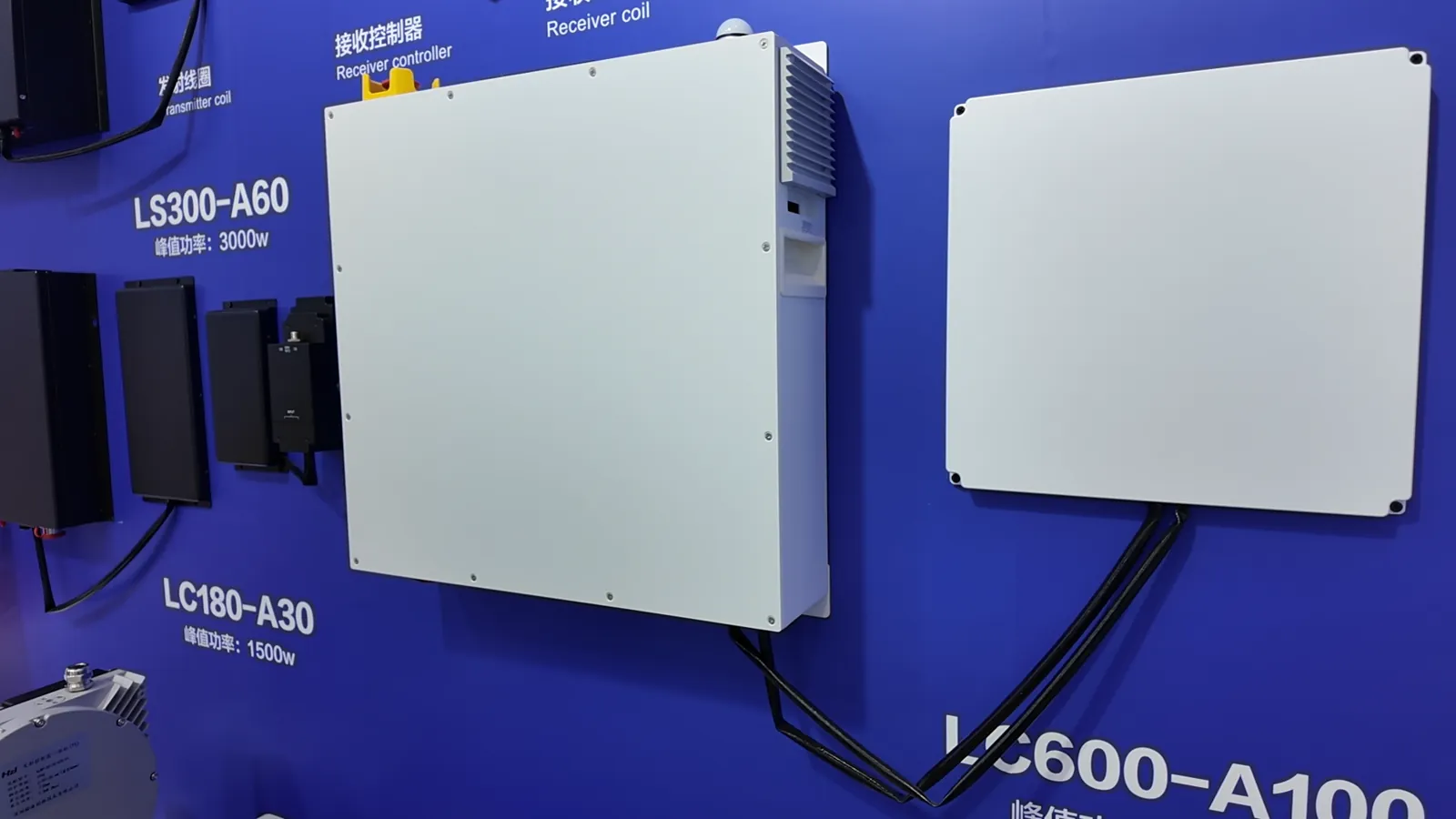
1.5 kW, 3 kW and 6 kW products on display
The exhibited range included 1.5 kW, 3 kW and 6 kW wireless charging products. The photographs show controller enclosures and charging coils mounted on a display wall, making the physical arrangement of the hardware easier to compare.
These power ratings are a starting point for selection. They do not, by themselves, establish charging time, continuous delivered power under every installation condition, or compatibility with a particular battery. A project still needs a matched transmitter and receiver, suitable output voltage and current, and validation against the battery and BMS requirements.
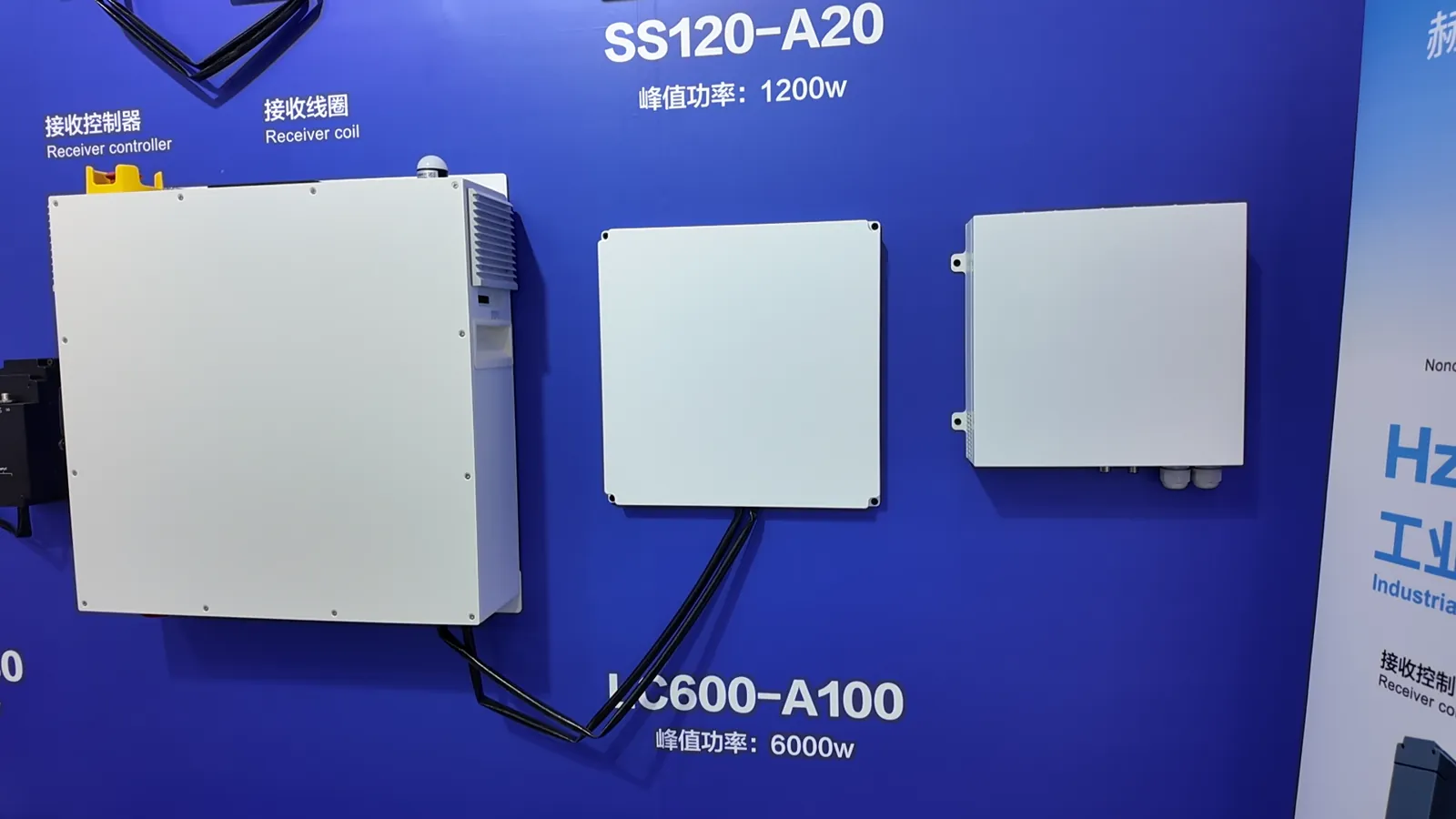
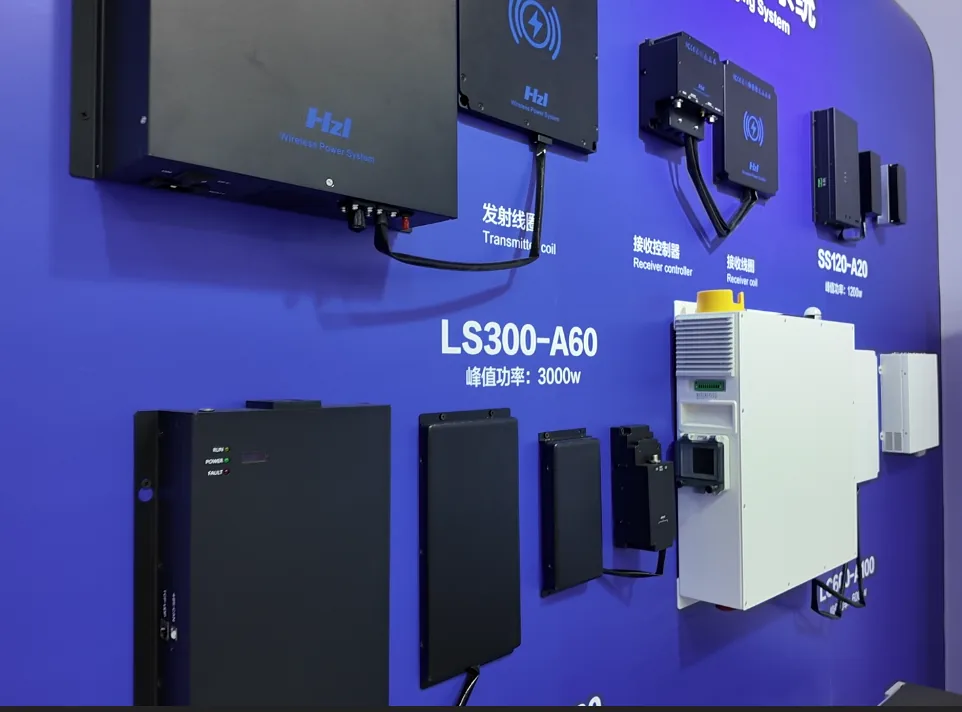
Choosing charging power around the working cycle
A vehicle that has a long charging break has different requirements from one that must recover energy during short stops between transport tasks. Before choosing between 1.5 kW, 3 kW and 6 kW, establish how much energy the robot uses during a representative shift and how much charging time is actually available.
- Energy consumption: measure operation with representative payloads, routes and auxiliary equipment.
- Charging windows: identify predictable stops and allow for travel, docking, communication and departure time.
- Battery acceptance: check the permitted charging voltage and current across state of charge and temperature.
- Power at the battery: account for system losses, charging limits and any reduction in current near full charge.
A higher rated charger only helps when the battery can accept the available output and the installation can sustain it. Our AGV and AMR charging power guide explains how to build an initial energy budget.
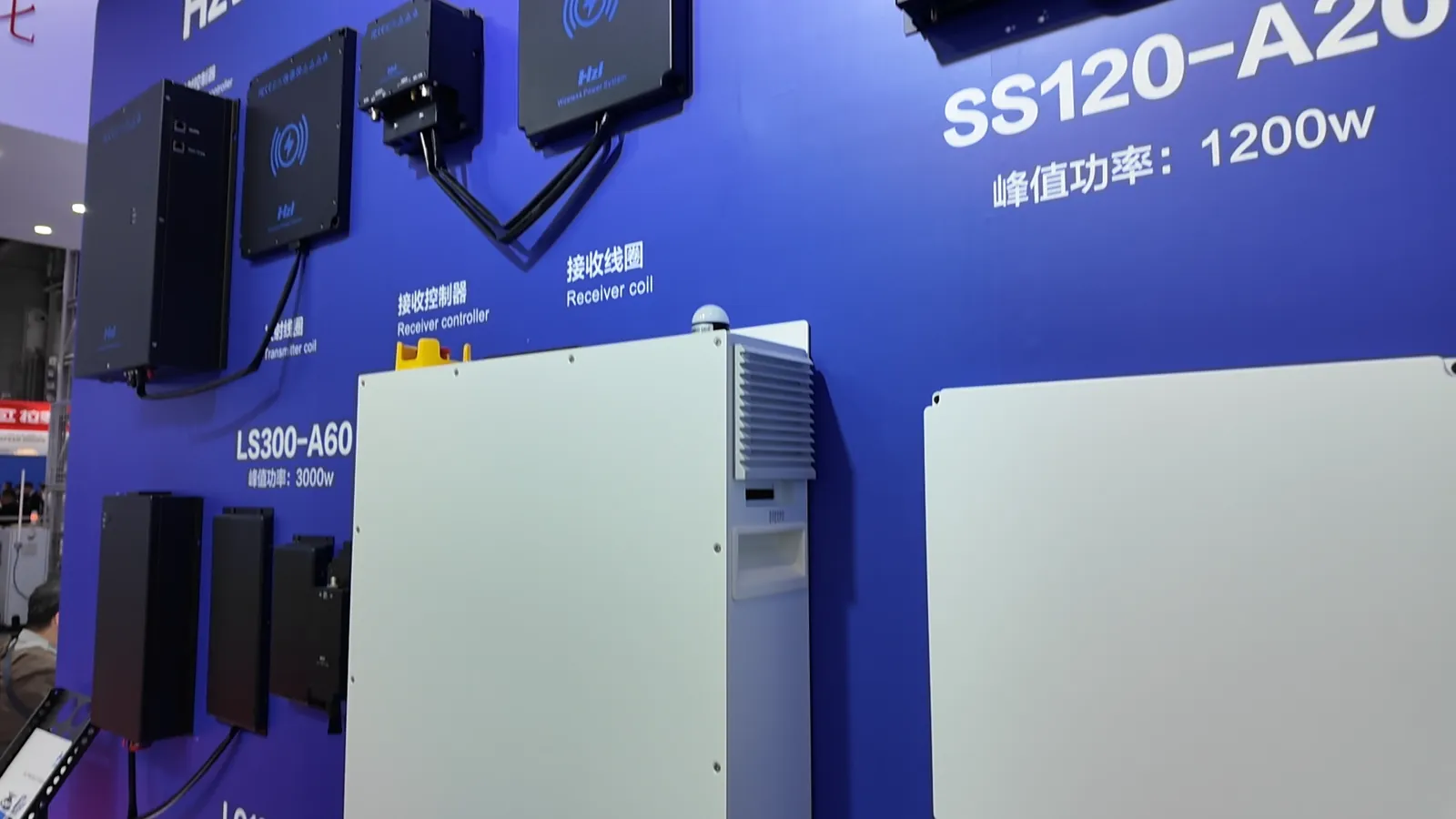
From exhibited hardware to a working charging station
Exhibition displays make hardware visible, while a production installation must fit the vehicle, its charging position and the operating environment. The next step is to define the complete charging interface.
- Mounting and alignment: define the coil gap, expected parking error, protective covers and mounting tolerances.
- Thermal conditions: evaluate the intended power inside the final enclosure at the expected ambient temperature.
- Control and communication: agree how the charger, vehicle controller and BMS start, regulate and stop charging, and respond to faults.
- Fleet scheduling: check that enough charging positions are available when multiple vehicles need energy.
- Validation: test repeated docking, interrupted charging and recovery in representative site conditions.
Contactless power transfer removes the exposed electrical charging contact interface. It still requires a carefully designed dock and a validated operating envelope. See our wireless charging dock design guide for a closer look at mechanical integration.
What to prepare for an AGV or AMR charging project
The 1.5 kW, 3 kW and 6 kW products exhibited at CeMAT ASIA provide a useful basis for comparing integration options. A meaningful technical review starts with the vehicle requirements: battery chemistry and voltage, BMS charge limits, energy consumption, available charging time, coil mounting space and docking accuracy.
Explore our AMR wireless charging integration guide, or send ONEPOINTECH your battery specifications and charging requirements to discuss a suitable system.
Event reference: Deutsche Messe: CeMAT ASIA 2026 dates, venue and exhibition scope. Photographs: ONEPOINTECH’s exhibition visit. Published November 5, 2026, while the exhibition is underway.